


Spotlight: Teissir Ben Ammar - applying graphene toward improved healthcare solutions
Bridging the gap between today’s proven advances and real, market-ready solutions.
You too can be a poster winner!
We are now accepting abstract submissions for Graphene Week 2026 to be held 21-15 September in Porto, Portugal. Student grants are available to eligible applicants.
 Learn more
Teissir Ben Ammar, a researcher working on biomaterials and nanotech at Blackleaf, won the poster award for applications at Graphene Week 2025 in Vicenza, Italy. She is working on graphene-based composite biomaterials for dental applications. With the aim of developing advanced restorative materials that better match clinical needs while staying safe and biocompatible, by using graphene as a functional building block. She shared with us her thoughts on the future of 2D materials from biomedical applications.
How did you first start working with graphene?
My journey into graphene research began during my end-of-engineering internship at the Institute of Chemistry and Processes for Energy, Environment and Health (ICPEES, CNRS, France). My research objective was to synthesise graphene using an environmentally friendly approach for new eco-friendly composite materials. The experience quickly became a turning point, sparking a fascination with graphene and nanotechnology.
Why are you excited to work on graphene and 2D materials?
What excites me about graphene and 2D materials is their growing readiness for real-world deployment: we now have the tools and understanding to turn their unique properties into manufacturable, high-value products. In dental applications, that can mean designing new composites materials that solve practical clinical problems while adding new functions. I’m drawn to the cross-disciplinary challenge and to building solutions that clinicians can actually adopt.
How did you first become interested in your current research project?
My interest in this research project began when I first worked with graphene during my internship and witnessed how a material only a few atoms thick could change surface properties at the macroscale. At the same time, I've always been drawn to the cell–materials interface, especially how cells and microbes interact with biomedical surfaces. When the PhD opportunity arose, it felt like the perfect way to turn that curiosity into impactful research.
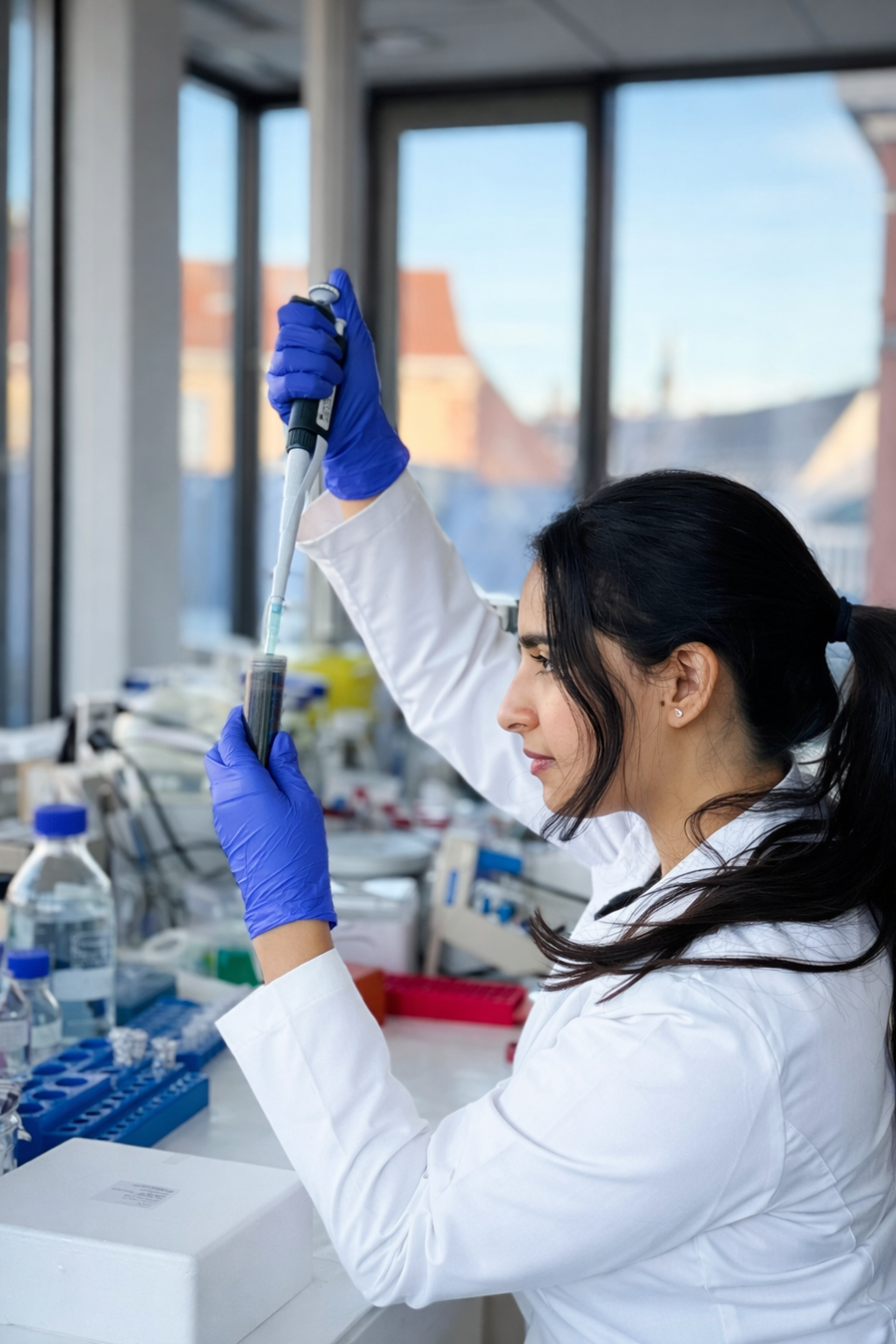
Teissir Ben Ammar, Graphene Week 2025 poster winner, in the lab.
What's your research focus? What is your current research goal?
My research focuses on graphene-based composite biomaterials for dental applications. I aim to develop advanced restorative materials that better match clinical needs while staying safe and biocompatible, by using graphene as a functional building block.
In what way can graphene improve this area?
Owing to graphene’s high mechanical properties and high specific surface area, graphene-based fillers and additives can enhance dental composites and cements by increasing flexural and compressive strength. They may also reduce bacterial adhesion and biofilm formation, thereby improving long-term durability. Moreover, graphene’s chemically active, tunable surface can promote improved cell-material adhesion.
Who has been the biggest influence or mentor in your career so far?
Throughout my career, I've been fortunate to learn from people who believed in my potential and empowered me to reach further. Housseinou Ba, co-founder of Blackleaf, where I now conduct my research, gave me the freedom and confidence to explore my own ideas, profoundly shaping how I approach problems. Dr. Tatiana Roman helped me bridge the gap between scientific innovation and clinical practice. My active participation in communities like iGEM, IEEE and JCI, along with INSAT's Promoting Female Talent Fellowship, where I benefited from coaching by Fatma Meriem Sassi, also played a pivotal role in shaping my path and opening doors early in my career.
My dream project is to develop “all-in-one” graphene materials that combine mechanical strength, self-healing and bioactivity."
Blackleaf
Why do you feel your research is important, and what benefits could it bring to society?
The societal benefits are clear: longer-lasting restorations mean fewer repeat treatments and lower costs for patients and healthcare systems. Through graphene-based innovations, we aim to deliver more effective care with less material use and less clinical waste, thereby reducing dentistry's environmental footprint.
As an early career researcher, where do you see your field going?
I see advanced graphene-based dental materials evolving into multifunctional, smarter and more personalised restoratives. Through surface functionalisation, graphene and other 2D fillers can be engineered to deliver targeted anti-biofilm activity, improved bio integration and controlled release. I also expect a stronger shift toward safer, more sustainable materials, with closer integration into digital dentistry workflows such as CAD/CAM and additive manufacturing.
What do you enjoy the most in your career path?
Research and development is like navigating uncharted waters, you set sail with a hypothesis, adjust your course as storms of uncertainty arise and sometimes discover new islands of possibility you never expected. I enjoy being the explorer who takes a complex scientific challenge, charts different routes through testing and iteration and watches as small breakthroughs ripple outward into real-world impact. Some expeditions lead to treasure, others teach you where the rocks are hidden, but that element of discovery keeps the journey exhilarating.
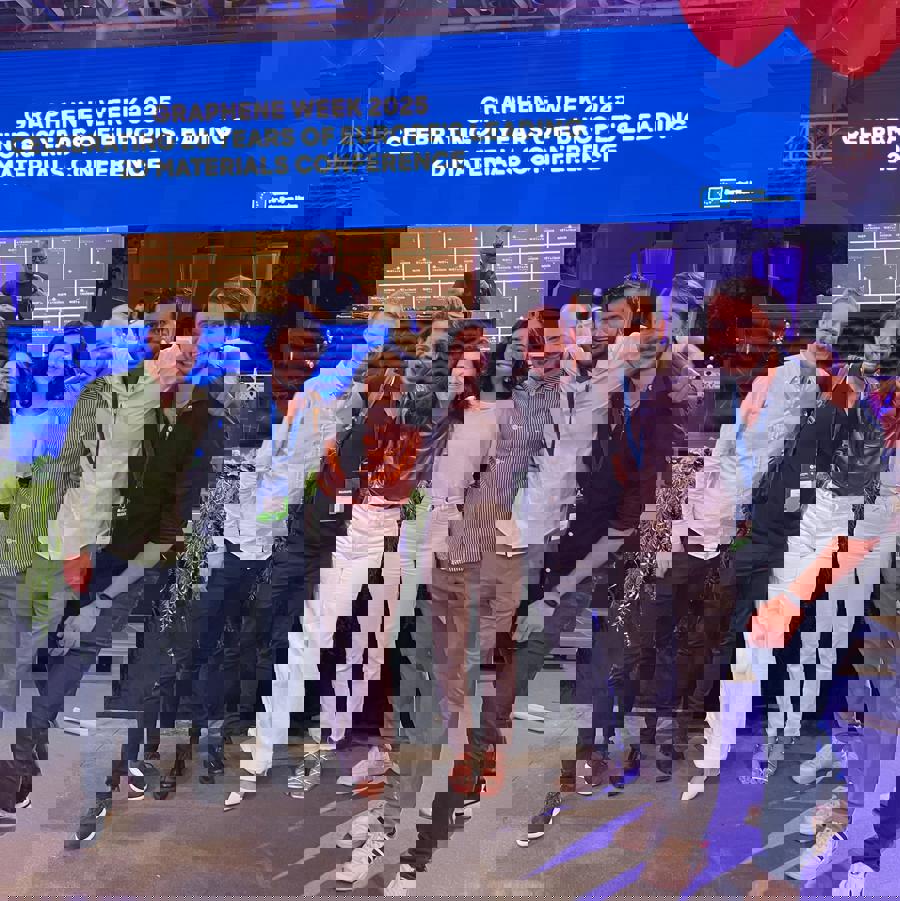
Teissir Ben Ammar, Graphene Week 2025 poster winner, celebrates at the conference dinner.
Do you have a favourite anecdote or moment from your research journey?
One of my favourite moments was the first time I imaged cells interacting with graphene, first with scanning electron microscopy, then with confocal fluorescence. I was genuinely fascinated by the beauty of what I saw: the cell shapes, the fine structures and especially the brightly coloured compartments revealed by the fluorescent markers. When the images appeared, I was so excited that I ran to show my colleagues.
What is the most challenging part of your current work?
Some key testing techniques aren’t always available in-house, so I often need collaborations to access the right methods. Since graphene is still new in medical materials, proving safety and biocompatibility is a major responsibility. On top of that, repeatability is challenging because small changes in graphene quality or dispersion can strongly affect results, so rigorous protocols and clear reporting are essential.
If you could work on any dream project involving graphene and other 2D materials, what would it be?
My dream project is to develop “all-in-one” graphene materials that combine mechanical strength, self-healing and bioactivity. While this remains the ultimate research north star, my goal is to bridge the gap between today’s proven advances and real, market-ready solutions that the dental industry can quickly adopt and benefit from.
I enjoy being the explorer who takes a complex scientific challenge, charts different routes through testing and iteration and watches as small breakthroughs ripple outward into real-world impact."
Blackleaf
What are your plans for the future?
My future plans focus on transitioning more strongly toward industry, where I can translate advanced graphene research into practical, market-ready solutions. I aim to work at the interface of research, product development and business development, building strong collaborations between academia, industry and clinicians to turn validated scientific advances into scalable technologies with real-world impact.
Tell us about your experience at Graphene Week 2025. How was this event for you?
Graphene Week 2025 was a great experience. It was inspiring to meet researchers from around the world, discover new applications for 2D materials and make valuable connections for future collaborations.
How did you feel about winning the Graphene Week Poster Award?
Winning the Graphene Week Poster Award was a great honour and a wonderful recognition. It was very rewarding to see our research resonate with the scientific community, and it’s motivated me to keep exploring what’s possible with graphene-based biomaterials.
I would like to thank the entire graphene community for their support and inspiration. The collaborative spirit I observed during Graphene Week was exceptional, and I'm excited to contribute to advancing 2D materials research and its applications in healthcare. I encourage other early career researchers to participate in these events and engage with this vibrant community.
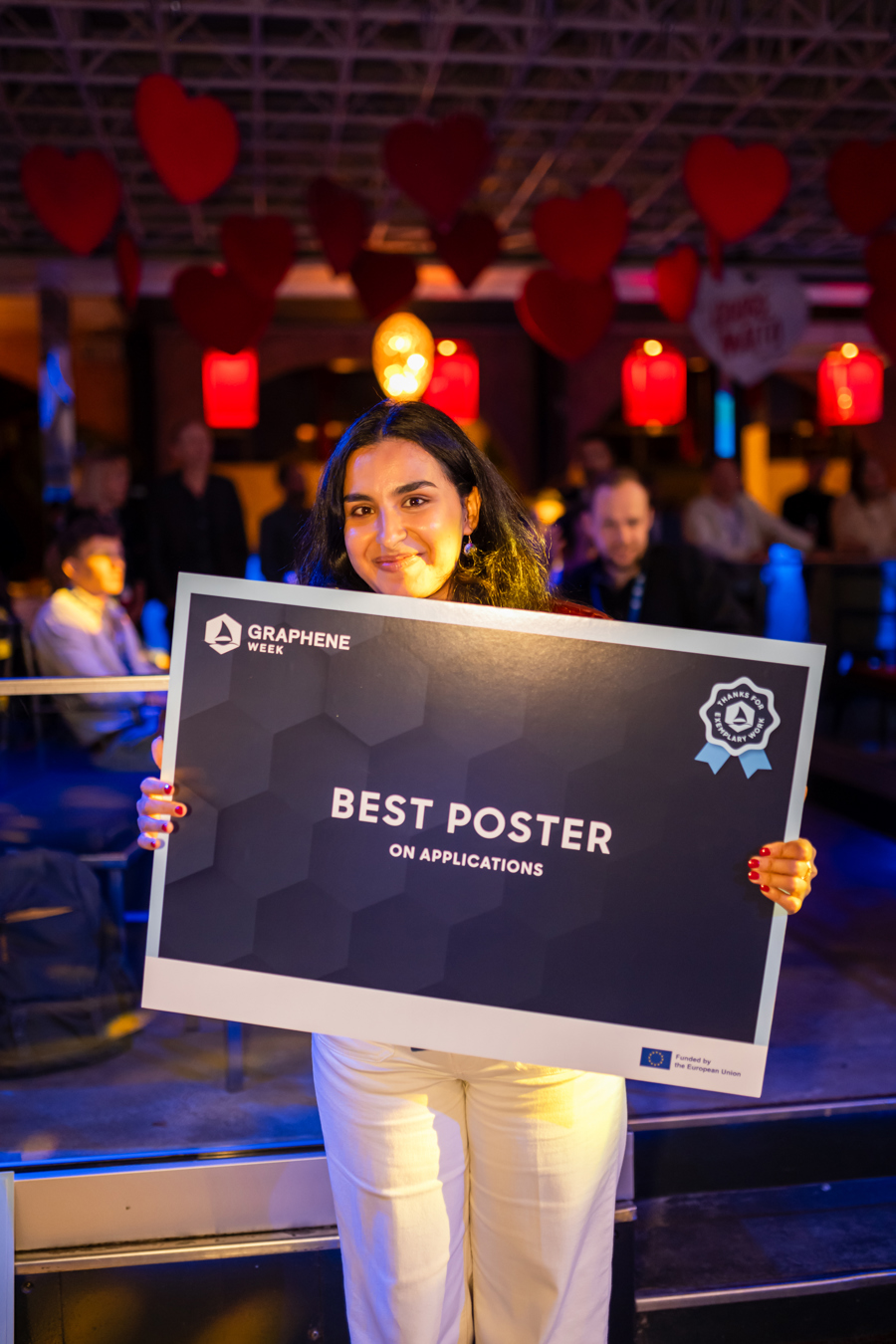
Teissir Ben Ammar, Graphene Week 2025 poster winner.
The first time I imaged cells interacting with graphene, I was genuinely fascinated by the beauty of what I saw."
Blackleaf
Author bio

Graphene Flagship
Bringing together 126 academic and industrial partners in 13 research and innovation projects and 1 coordination and support project, the Graphene Flagship initiative will continue to advance Europe’s strategic autonomy in technologies that rely on graphene and other 2D materials. The initiative, which builds on the previous 10-years of the Graphene Flagship, is funded by the European Commission’s Horizon Europe research and innovation programme.