


2D Materials Research Recognised by the Kavli Prize for the First Time
Twistronics pioneers honoured with the 2026 Kavli Prize in Nanoscience
The 2026 Kavli Prize in Nanoscience has been awarded to Eva Y. Andrei, Pablo Jarillo-Herrero and Allan H. MacDonald for their pioneering contributions to the field of twistronics, marking a historic milestone for the global 2D materials community. For the first time since the establishment of the Kavli Prize, research rooted in two-dimensional materials has been recognised with one of the world's most prestigious scientific honours.
Awarded by the Norwegian Academy of Science and Letters, the Kavli Prize recognises groundbreaking advances in astrophysics, nanoscience and neuroscience. The 2026 Nanoscience Prize honours the three researchers “for foundational work that established the field of twistronics,” a rapidly expanding area of research that exploits the unique properties that emerge when atomically thin materials are stacked and rotated relative to one another.
The award highlights the extraordinary scientific journey that began with the isolation of graphene in 2004 and evolved into the broader field of van der Waals materials and heterostructures. Today, hundreds of two-dimensional materials are being explored for applications ranging from electronics and photonics to sensing, energy technologies and quantum devices.
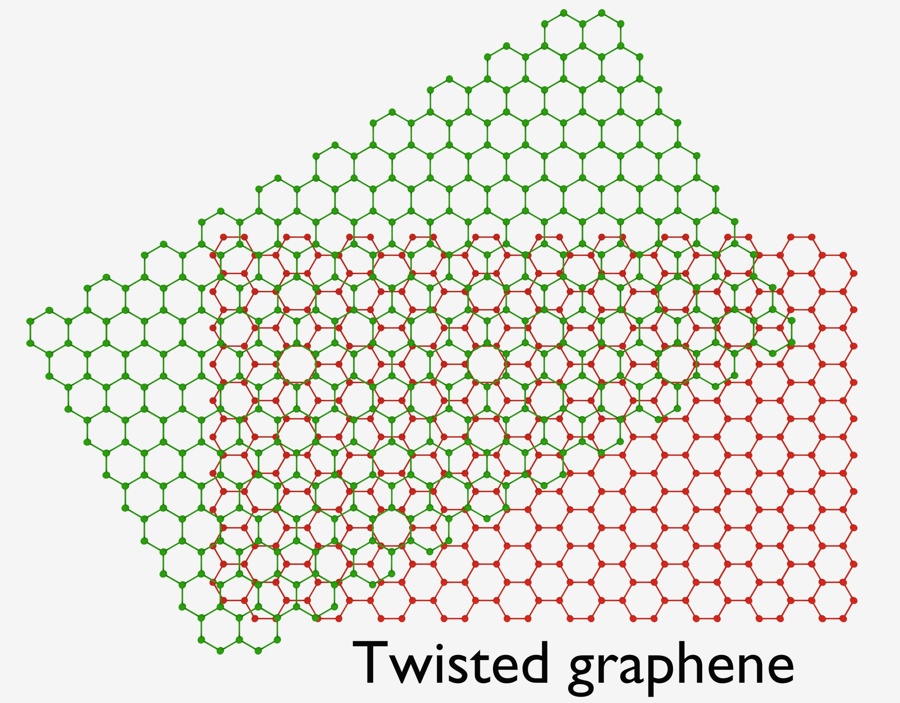
Twistronics emerged from the discovery that the electronic properties of layered 2D materials can be dramatically altered by controlling the angle between adjacent atomic layers. Theoretical predictions by Allan H. MacDonald, combined with experimental breakthroughs by Eva Y. Andrei and Pablo Jarillo-Herrero and their collaborators, revealed that a small “magic-angle” twist between graphene layers could give rise to entirely new quantum phenomena, including correlated electronic states and superconductivity. These discoveries transformed understanding of how material properties can be engineered at the atomic scale and opened a new frontier in condensed matter physics.
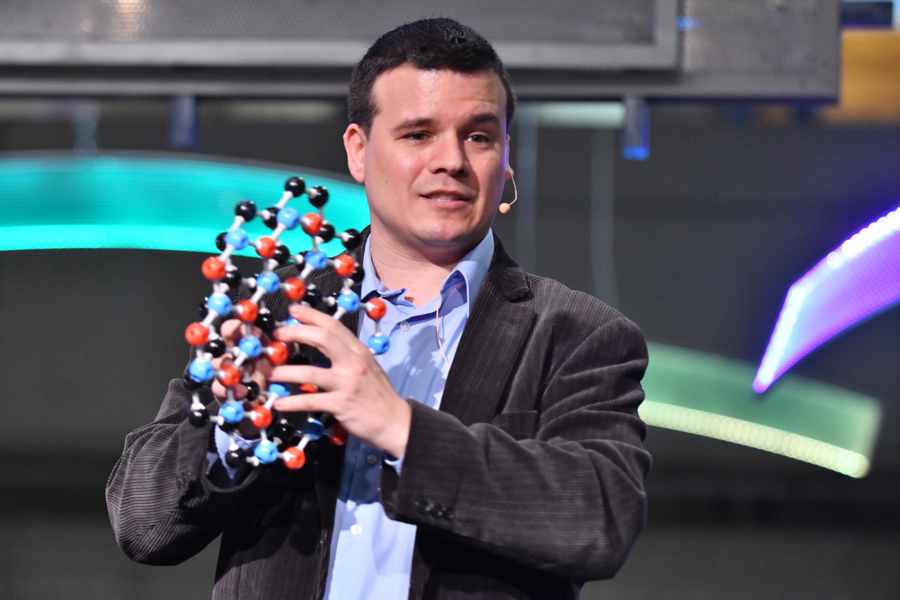
Pablo Jarillo-Herrero explains twistronics
For Europe’s 2D materials community, including initiatives such as the Graphene Flagship, the Kavli Prize serves as powerful recognition of the transformative impact that atomically thin materials continue to have on science and technology. It also underscores the importance of sustained investment in fundamental research, which often lays the foundation for future technological breakthroughs."
The significance of the award extends beyond the achievements of the individual laureates. It reflects the growing scientific and technological importance of the wider 2D materials ecosystem, which has expanded dramatically over the past two decades. The field now encompasses a broad range of materials, device architectures and industrial applications, attracting major investment from governments, research organisations and industry worldwide.
For Europe’s 2D materials community, including initiatives such as the Graphene Flagship, the Kavli Prize serves as powerful recognition of the transformative impact that atomically thin materials continue to have on science and technology. It also underscores the importance of sustained investment in fundamental research, which often lays the foundation for future technological breakthroughs.
The laureates will formally receive the Kavli Prize during a ceremony in Oslo in September 2026. Each Kavli Prize category carries an award of USD 1 million, shared among the recipients.
As the field of 2D materials continues to mature, the 2026 Kavli Prize stands as a landmark moment—one that recognises not only the birth of twistronics, but also the profound scientific potential of materials just a single atom thick.
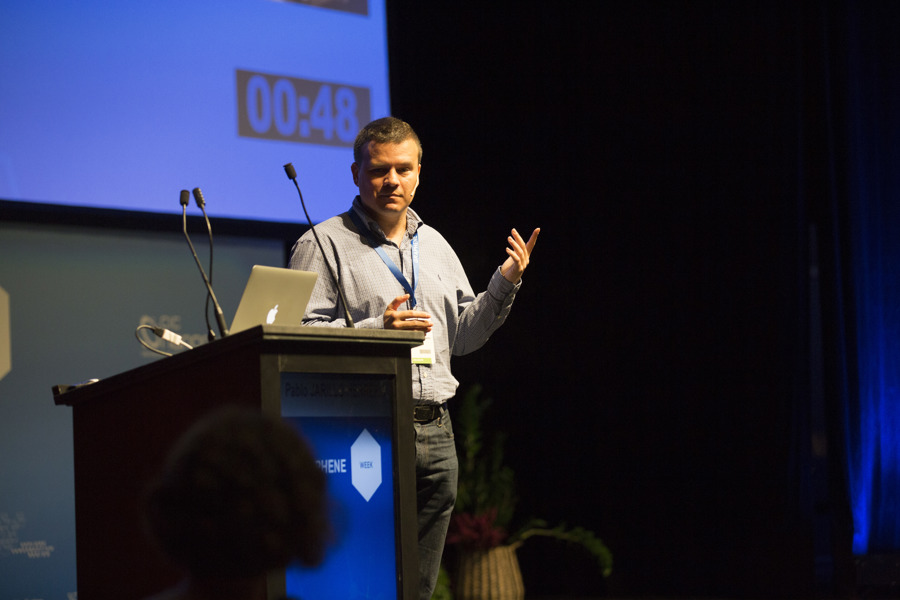
Pablo Jarillo-Herrero presents twistronics at Graphene Week
Author bio

Graphene Flagship
Bringing together 126 academic and industrial partners in 13 research and innovation projects and 1 coordination and support project, the Graphene Flagship initiative will continue to advance Europe’s strategic autonomy in technologies that rely on graphene and other 2D materials. The initiative, which builds on the previous 10-years of the Graphene Flagship, is funded by the European Commission’s Horizon Europe research and innovation programme.