


Spotlight: Chenda Vong - Graphene Week Impact Leader
Graphene Week 2025 impact leader Chenda Vong researches van der Waals heterostructures based on 2D transition-metal dichalcogenides at Sogang University. We asked her to share some insights on her research and future aspirations with the Graphene Flagship.
How did you first start working with graphene/2D materials?
I started working in the field of characterisation of graphene and related two-dimensional materials using Raman Spectroscopy in my master’s program at Sogang University in the Republic of Korea, under the supervision of Professor Hyeonsik Cheong.
Why are you excited to work on 2D materials?
I am fascinated by how simple yet powerful these materials are, from being exfoliated to sub-nanometre thickness using Scotch tape to being combined into heterostructures with versatile opto- and electronic properties. I am especially excited to observe their fundamental behaviour and interlayer interaction via Raman spectroscopy.
Who has been the most significant influence or mentor in your career so far?
The most significant influences in my journey so far have been my current supervisor, Professor Hyeonsik Cheong, and my senior, Associate Professor Tharith Sriv, who generously supported and guided me in both academic development and career planning. Last but not least, I am so deeply grateful to my laboratory mentors, juniors and friends, whose support has been essential to my academic progress and personal well-being.
How did you first become interested in your current research project?
I began working on this project after my supervisor proposed it. Over time, as I explored it further, I became genuinely more curious and discovered increasingly interesting results.
What’s your research focus? What is your current research goal?
I work on van der Waals heterostructures based on 2D transition-metal dichalcogenides, particularly MoS2/MoTe2 and MoS2/WSe2 systems. I study how isotropic and anisotropic materials interact, as well as how layer-thickness asymmetry and interlayer coupling influence low-frequency phonons, such as shear and breathing modes, using Raman spectroscopy, second-harmonic generation (SHG), and linear chain model (LCM) calculations. Right now, my goal is to establish a qualitative understanding of how a mechanically soft monolayer can modify the vibrational response of a much thicker and stiffer adjacent layer, beyond the scope of bilayer heterostructures.
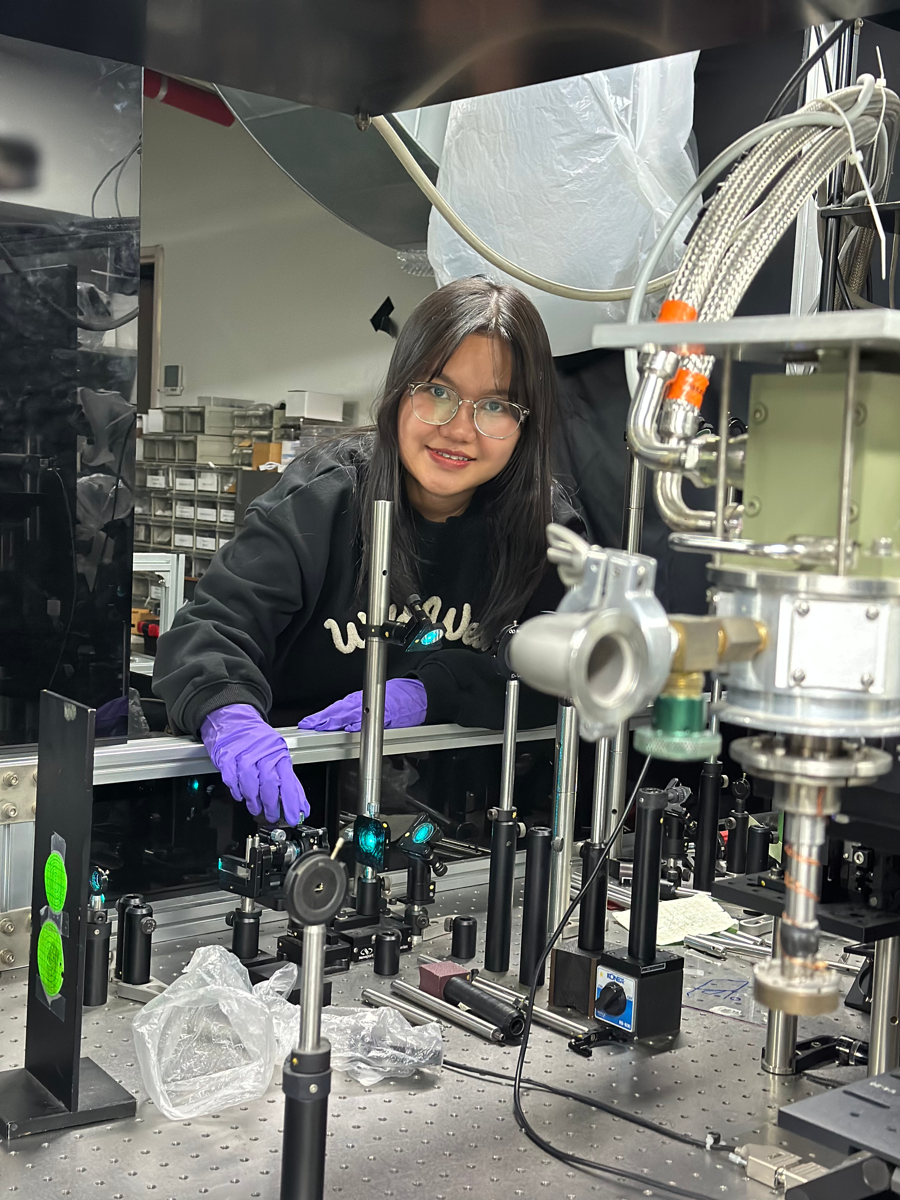
Chenda Vong
Graphene Week 2025 impact leader
Sogang University
In what way can 2D materials improve this area?
Graphene and other 2D materials give us a unique way to engineer their properties. Because they are atomically thin, we can vertically stack them and study the interactions that do not exist in intrinsic materials.
Why do you feel your research is important, and what benefits could it bring to society?
By understanding how the material interacts within layered stacking systems, we can design more reliable and efficient devices. This research provides fundamental insight into how thin and thick layers interact, supporting the future of device engineering by improving efficiency and stability.
As an early career researcher, where do you see your field going?
I see the field moving beyond single-material studies toward asymmetric, thickness-engineered heterostructures, especially those combining 2D magnetic materials with transition-metal dichalcogenides.
What do you enjoy the most in your career path?
I enjoy fabricating new, exciting material combinations and uncovering their physical meaning through phonon interactions, especially when a simple Raman peak reveals complex interlayer phenomena. Some combinations exhibit surprising properties that can become real gamechangers for engineers.
Do you have a favourite anecdote or moment from your research journey?
The moment I first started my project was not a happy story, but it became an important lesson for my peers and me. We initially overlooked the interference effects between the SiO2/Si substrate, the laser and the heterostructures themselves, which strongly influenced the Raman peak intensity. This mistake cost me nearly three months of work. Later, we realised that choosing a substrate with an appropriate SiO2 thickness is a critical step before fabricating samples. Since then, interference effects calculation or article reviews have become a standard step before I begin any experiment.
Research is rarely a straight path, and every PhD journey is unique. In the end, curiosity and persistence matter more than publication counts or how fast one graduates."
Sogang University
What is the most challenging part of your current work?
Well, the challenges span from experimentation to data analysis. Experimentally, it is not easy to consistently fabricate heterostructures with specific twist angles, especially since my work requires many samples. Interpreting results is also challenging because multiple parameters, such as thickness, stacking order and twist angles, must be considered simultaneously. Finally, it can be challenging to communicate the significance of this work to an audience outside the field, as it is not directly solving a specific problem but rather about building a fundamental understanding that supports and guides device development.
If you could work on any dream project involving graphene/2D materials, what would it be?
I would love to develop a device based on a newly designed 2D heterostructure from my own research, which could be a meaningful turning point for engineers.
What are your plans for the future?
I plan to share what I have learned about graphene and 2D materials, particularly the capabilities of Raman spectroscopy. I aim to pursue a position as a lecturer or researcher in my home country, Cambodia. I will continue my research on 2D materials and gradually connect fundamental physics with practical applications.
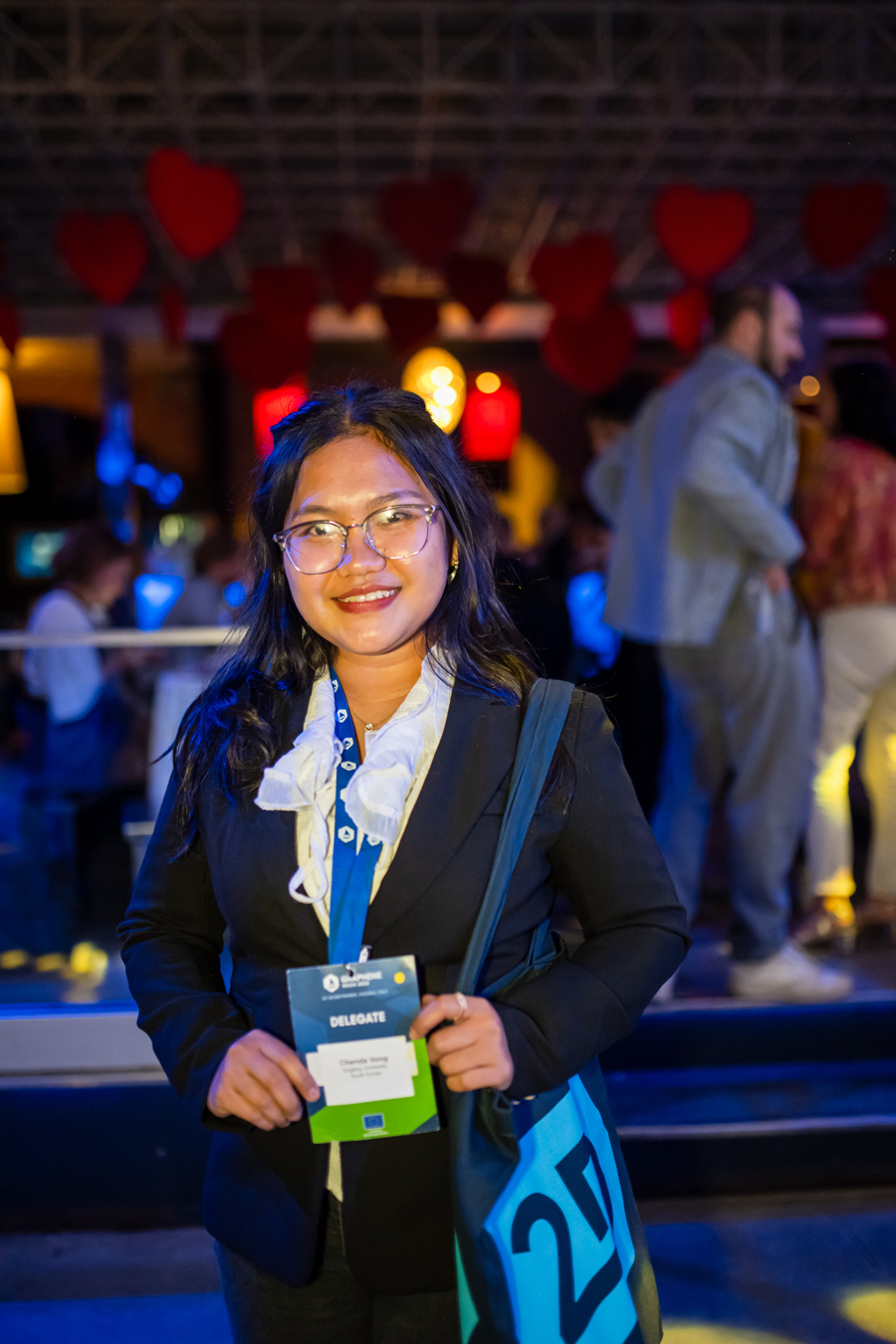
Graphene Week 2025 impact leader Chenda Vong
Tell us about your experience at Graphene Week 2025. How was this event for you?
Honestly, this was my first international conference outside the Republic of Korea. Graphene Week 2025 was more than just a conference; it was a place to share research discoveries and to connect with a diverse research community. The event inspired me and gave me the opportunity to meet many scholars and researchers, as well as to build meaningful connections. It was an unforgettable experience. I especially enjoyed the Gala dinner, where dancing and the award ceremony created a warm, memorable atmosphere.
How did you feel about winning the Graphene Week Impact Leaders Award?
I was amazed to receive the award, as it was my first time engaging with this community. It was my great honour to be recognised, and I returned home with pride, sharing my moment with my circles. Receiving the award also encouraged me to create a broader impact beyond the conference itself.
Is there anything else you would like to share?
Research is rarely a straight path, and every PhD journey is unique. In the end, curiosity and persistence matter more than publication counts or how fast one graduates.
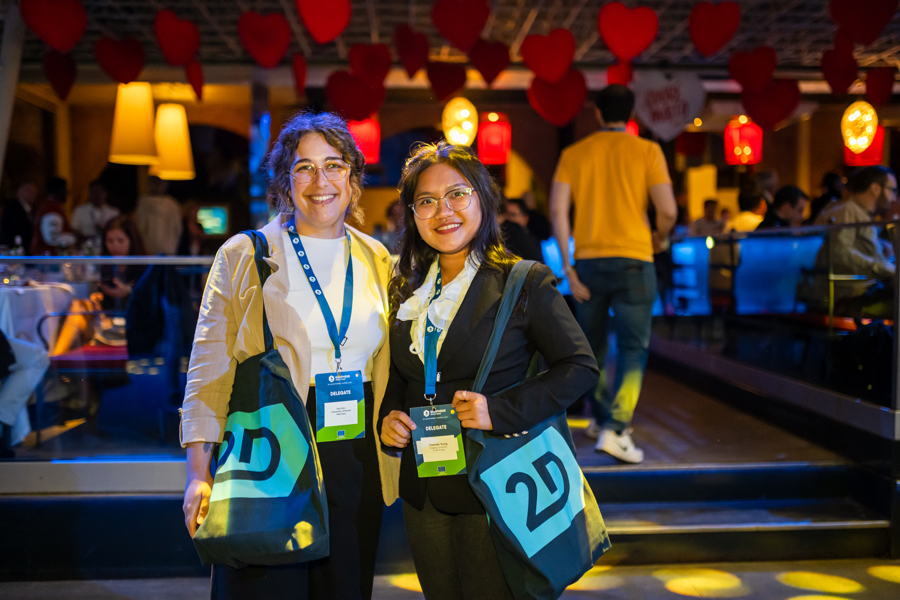
Graphene Week 2025 Impact Leaders
Become an Impact Leader!
Our Graphene Week Impact Leader programme is a chance to be recognised for community building efforts in the field of 2D materials.
It provides the opportunity to expand your network, showcase your dedication, gain recognition and strengthen the collaborative spirit of our field.
 Graphene Week 2026 Impact Leader
Author bio

Rebecca Waters
Rebecca Waters is Work Package Dissemination leader for the GrapheneEU project and the Dissemination Task Leader for the 2D Pilot Line. She oversees the Dissemination activities and manages the work package tasks and personnel. Rebecca also serves as the Graphene Flagship Communications Officer writing and disseminating news, managing the website and overseeing social media activities and media outreach. A former journalist with a degree from Northwestern University's Medill School of Journalism, Rebecca worked for both consumer and B2B magazines before joining the Graphene Flagship. In her spare time, she enjoys cooking, boating and exploring the world with her family.