

Spotlight: Alessandro Calza - exploring the future of sustainable nanomaterials, one simulation at a time
Where nanoscience meets sustainability: Alessandro Calza examines how graphene oxide can improve wastewater treatment through advanced simulations.
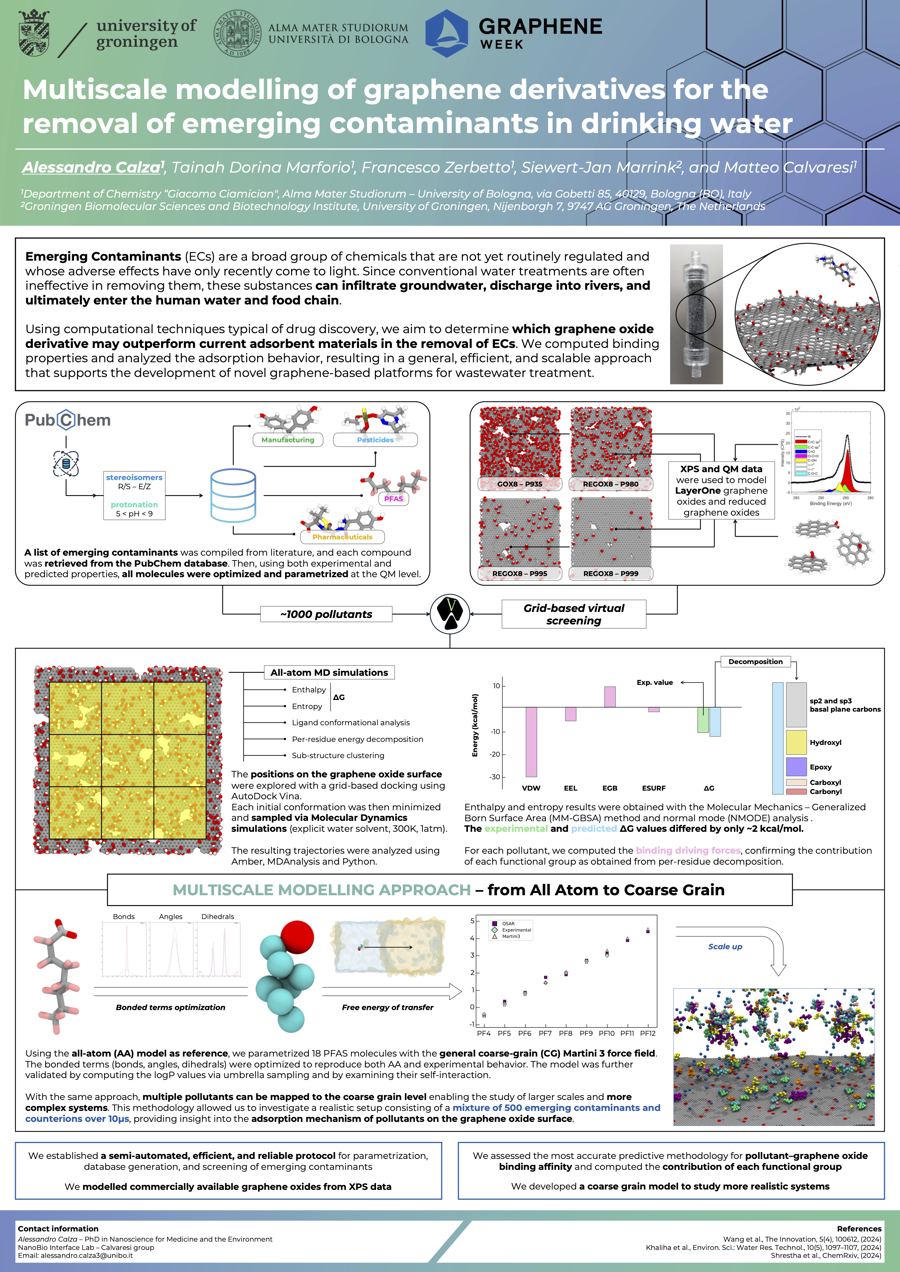
Alessandro Calza, a PhD Student in nanoscience for medicine and the environment at the University of Bologna’s NanoBio Interface Lab, won the poster award for his research on sustainable use of graphene at Graphene Week 2025 in Vicenza, Italy. He is working on a simulation pipeline to characterise interactions between nanomaterials and contaminants. He shared some insights on his research and aspirations with the Graphene Flagship.
How did you first start working with graphene and 2D materials?
Our group has long focused on nanomaterials and how they interact with biological systems, so I was already acquainted with graphene and other 2D materials. During my master’s thesis, I started working on simulations of hexagonal boron nitride and graphene. Later, during my PhD, I moved to graphene oxide for wastewater treatment in collaboration with ISOF-CNR.
Why are you excited to work with 2D materials?
Graphene and other two-dimensional materials are compelling because of their remarkable versatility. Their characteristics can be adjusted in numerous ways, and they can be used across very different areas, from environmental technologies to electronic devices. I enjoy working in a field that still feels wide open and full of possibilities, where even small modifications in structure or functionalisation can produce significant outcomes.
Who has been the biggest influence or mentor in your career so far?
My partner has unquestionably been the most significant influence on my work. She is a researcher in quantum mechanics. Even though our subjects and methods differ substantially, our scientific conversations consistently prompt me to view problems more broadly and to examine my own work with greater critical distance. She is also the one who continually motivates me, particularly when things don’t go as expected, and that encouragement has genuinely shaped the way I handle challenges in my research.
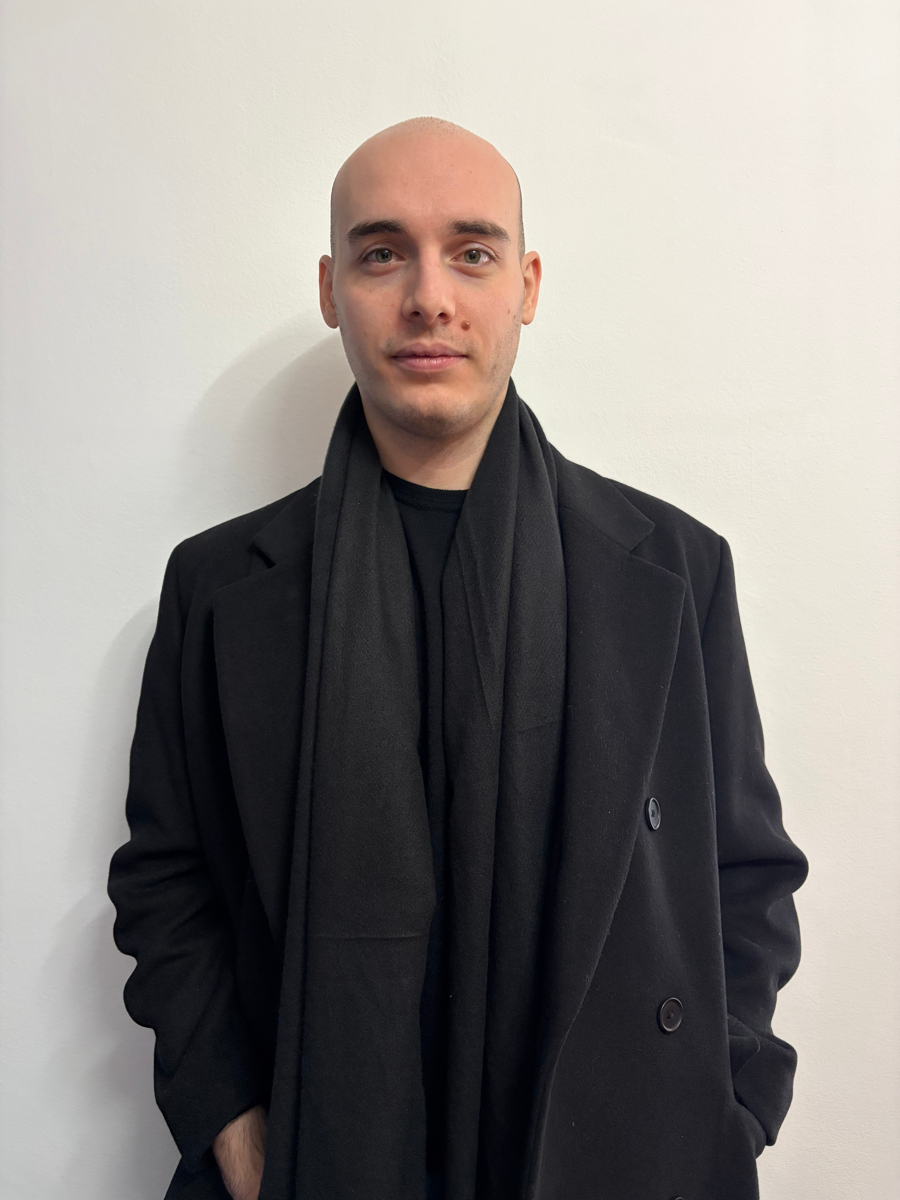
Alessandro Calza, a PhD Student in nanoscience for medicine and the environment at the University of Bologna’s NanoBio Interface Lab, won the poster award for his research on sustainable use of graphene at Graphene Week 2025 in Vicenza, Italy.
How did you first become interested in your current research project?
It started as a collaboration with Professor Manuela Melucci’s group at ISOF-CNR, focused on modelling the interactions between graphene oxide and pollutants. Over time, the project developed into my PhD work, where I began combining atomistic and coarse-grained molecular dynamics to describe complex systems more efficiently. That shift toward coarse-graining opened new possibilities for exploring larger and more heterogeneous environments while keeping relevant molecular details.
What’s your research focus? What is your current research goal?
My work focuses on developing a simulation pipeline that combines methods commonly used in biomolecular studies, such as molecular docking and molecular dynamics at both atomistic and coarse-grained levels, to characterise interactions between nanomaterials and contaminants. We currently apply this to graphene oxide and small molecules for wastewater remediation, but the same framework could be extended to biological systems and other types of materials.
In what way can graphene improve this area?
Graphene oxide and similar materials have great potential for adsorption and separation processes, mainly due to their surface area and chemical flexibility. From a computational point of view, there’s still room for improvement in how these materials are represented and standardised in simulations. More consistent models would make it easier to compare results and design better materials.
Computational chemistry is evolving rapidly thanks to AI. I believe we’ll see stronger integration between traditional simulations and AI models, which will allow us to explore material design much more efficiently."
NanoBio Interface Lab, University of Bologna
Why do you feel your research is important, and what benefits could it bring to society?
My research focuses on pollution, which is a pressing issue in modern society. Many emerging contaminants are difficult to remove using traditional water treatment methods. By combining modelling and experiments, we aim to better understand how graphene oxide captures these pollutants and to improve future materials for waste-water remediation.
As an early career researcher, where do you see your field going?
Computational chemistry is evolving rapidly thanks to AI. New algorithms and data-driven approaches are changing how we simulate and predict material properties. I believe we’ll see stronger integration between traditional simulations and AI models, which will allow us to explore material design much more efficiently.
What do you enjoy the most in your career path?
I enjoy the variety. Every project involves learning new tools, testing different approaches, and understanding complex systems from different angles. There’s room for creativity, even within a highly technical field.
Do you have a favorite anecdote or moment from your research journey?
Once I spent several days trying to understand why a simulation wouldn’t run correctly, only to find that one line in the input file was misplaced. Fixing it solved everything immediately. It was a useful reminder of how much attention to detail this work really requires.
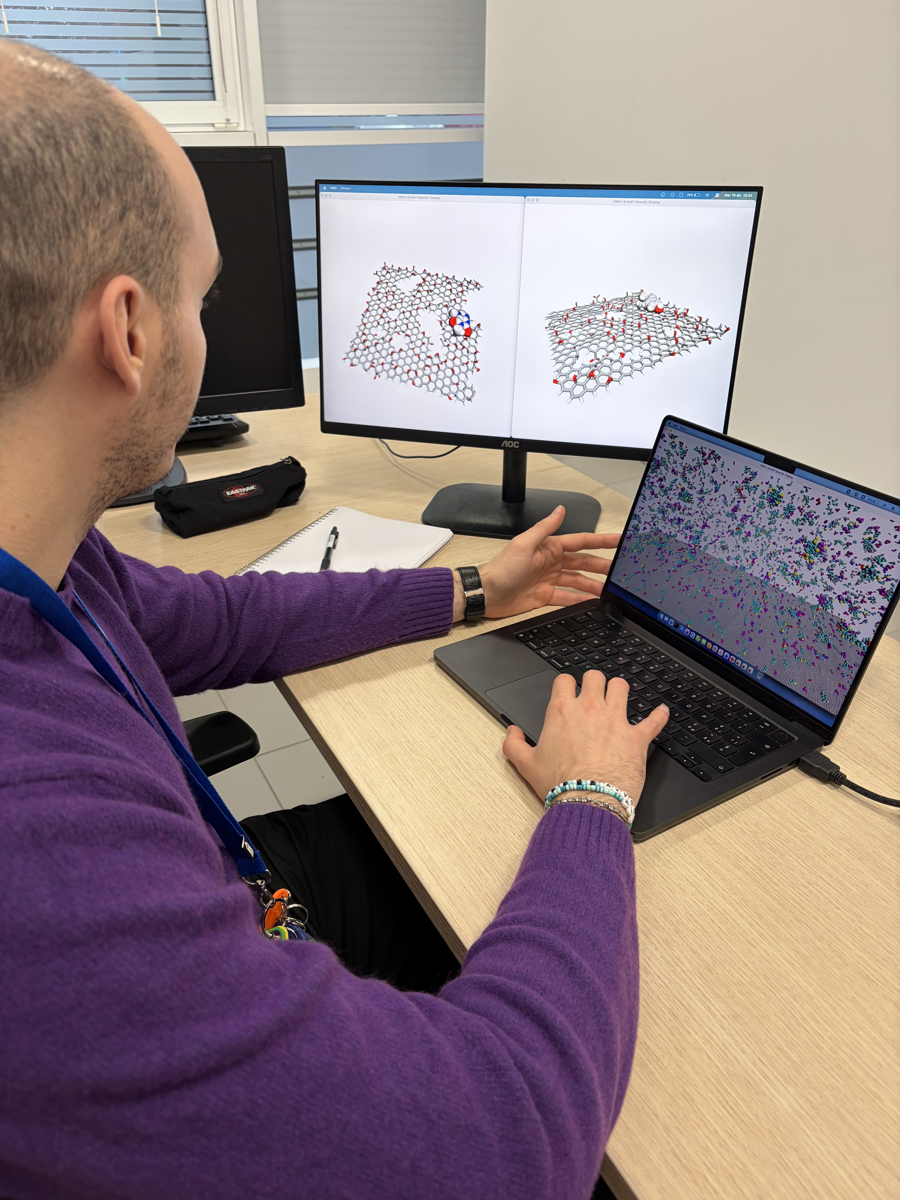
Alessandro Calza at work.
What is the most challenging part of your current work?
Balancing accuracy and computational cost. Realistic systems are complex, but you can’t always afford to simulate every atom. Choosing the right level of detail is often the hardest part.
If you could work on any dream project involving 2D materials, what would it be?
I would love to work on integrating AI with molecular dynamics to predict adsorption or interaction properties of functionalised graphene directly from experimental data. It would be a good way to connect simulations and experiments into a single, more efficient predictive framework.
What are your plans for the future?
I’d like to continue working in academia and deepen my research in molecular dynamics, particularly in method development and the study of complex systems. At the same time, given the uncertainty of an academic career, I’m also open to positions in private research institutes where I can keep working on advanced computational methods and molecular simulations.
How was your Graphene Week 2025 experience?
Graphene Week was my first large European conference, and it offered a great opportunity to meet people from different fields and backgrounds. The organisation was excellent, and the level of discussion was very high. It also gave me a broader perspective on where graphene research is heading.
How did you feel about winning the Graphene Week poster award?
It was unexpected, but very rewarding. It gave me a chance to look back and appreciate how much progress I had made during my PhD. It’s always nice to see your work recognized by the scientific community.
Is there anything else you would like to add?
Just a thank-you to the organizers of Graphene Week and to everyone I’ve had the chance to collaborate with. Their support and feedback have been essential to this journey.
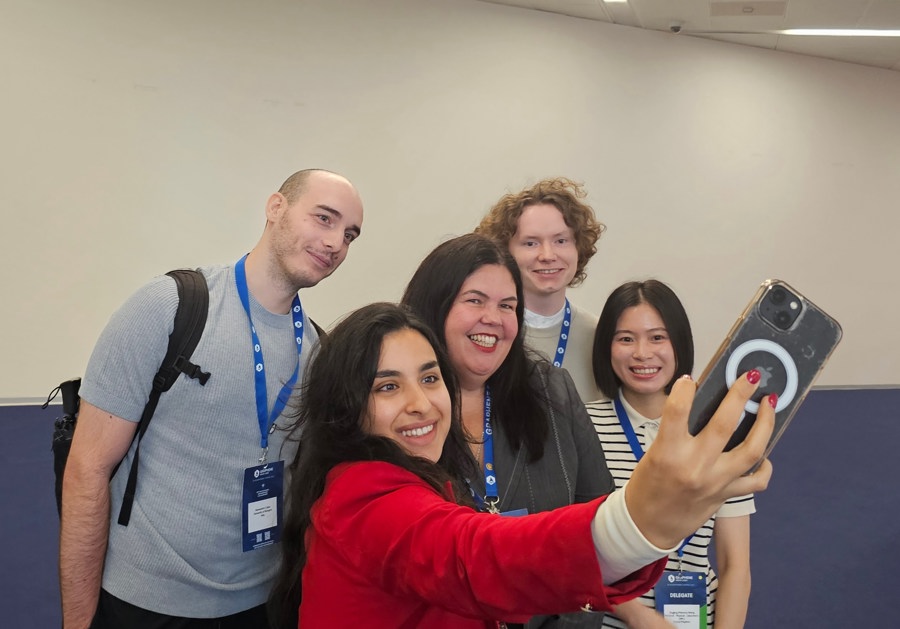
Graphene Week 2025 poster winners.
Author bio

Rebecca Waters
Rebecca Waters is Work Package Dissemination leader for the GrapheneEU project and the Dissemination Task Leader for the 2D Pilot Line. She oversees the Dissemination activities and manages the work package tasks and personnel. Rebecca also serves as the Graphene Flagship Communications Officer writing and disseminating news, managing the website and overseeing social media activities and media outreach. A former journalist with a degree from Northwestern University's Medill School of Journalism, Rebecca worked for both consumer and B2B magazines before joining the Graphene Flagship. In her spare time, she enjoys cooking, boating and exploring the world with her family.