


2D ENGINE team spotlight: ESRF
The ID10 SURF team at the European Synchrotron Radiation Facility (ESRF) plays a key role in the 2D-ENGINE consortium by providing advanced X-ray tools and expertise to study and validate 2D materials. As a partner, ESRF supports the project’s goal of developing high-quality, controlled 2D layers by enabling operando measurements and detailed structural characterisation critical for designing reliable synthesis protocols.
At the heart of ESRF's work is the liquid metal catalyst (LMCat) CVD reactor. Its beryllium walls are virtually transparent to X-ray radiation, which allows scientists to probe liquid samples in situ. By combining techniques such as GID, XRR, GISAXS, and operando radiation mode optical microscopy, the team can gather information on a sample’s elemental composition, thickness, electron-density profiles, and more. As a result, this setup gives researchers a truly unique ability to capture 2D material growth processes in real time, from atomic to mesoscopic scales.
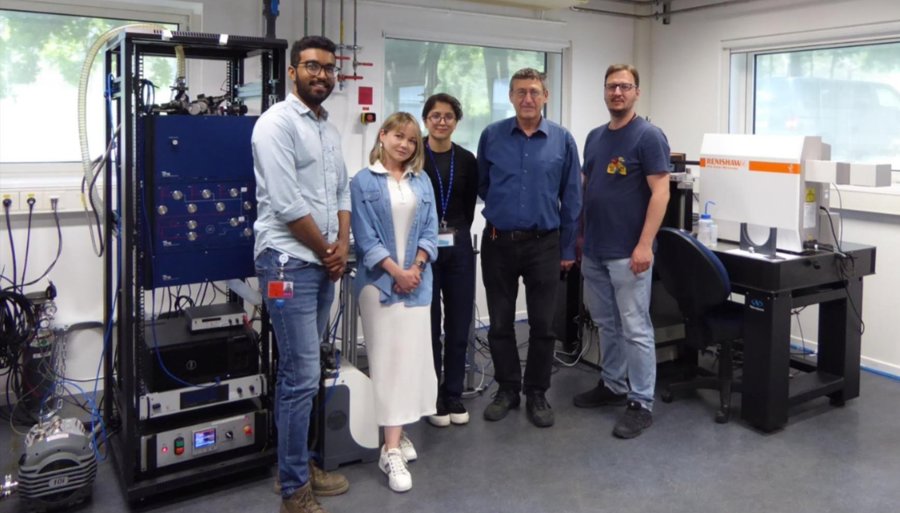
The ID10 SURF team at European Synchrotron Radiation Facility (ESRF).
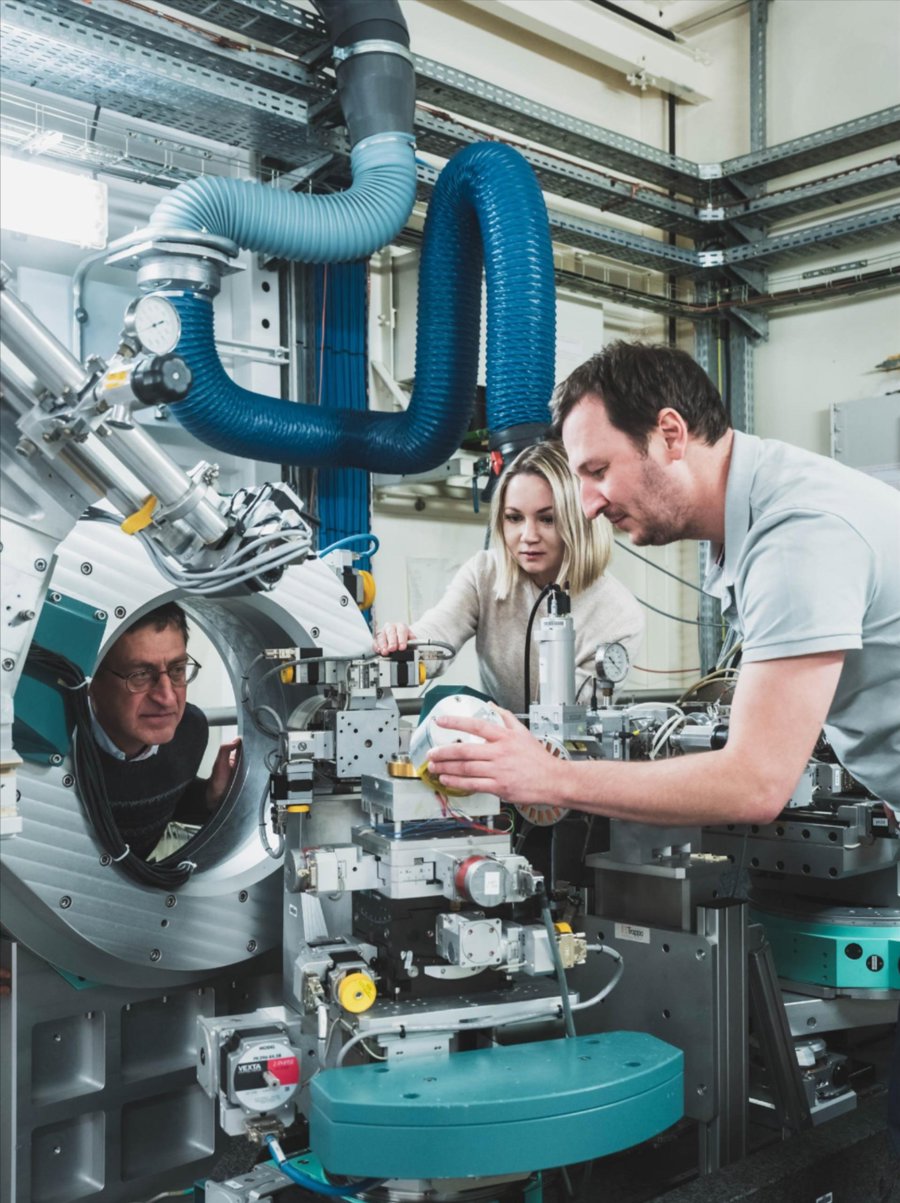
2D ENGINE's team at ESRF
Quick facts about 2D Engine work at ID10
➡ Integrated GID, XRR, and GISAXS
➡ Real-time radiation mode optical microscopy
➡ Allows for operando studies in an LMCat CVD reactor under high temperature and near-ambient pressure
➡ Optimised beam geometry for stable probing of liquids and complex interfaces
➡ Multiscale characterisation: from atomic ordering to mesoscale morphology
➡ Powered by three undulator segments for coherent, high-brilliance X-ray beams
ESRF in Numbers
The European Synchrotron Radiation Facility (ESRF) in Grenoble is one of the most powerful synchrotron sources in the world. Its X-rays are 100 billion times brighter than those used in medical imaging, offering scientists a "super-microscope" to observe matter at the atomic level. Every year, 9,000+ researchers from around the world, including those from 19 partner countries, use the ESRF facilities to study matter, nanotechnology, life, and heritage. 35 ESRF stations (including ID10), along with 13 collaborating research group beamlines, operate 24/7, providing scientists with advanced tools to explore the structure of matter far beyond conventional methods.
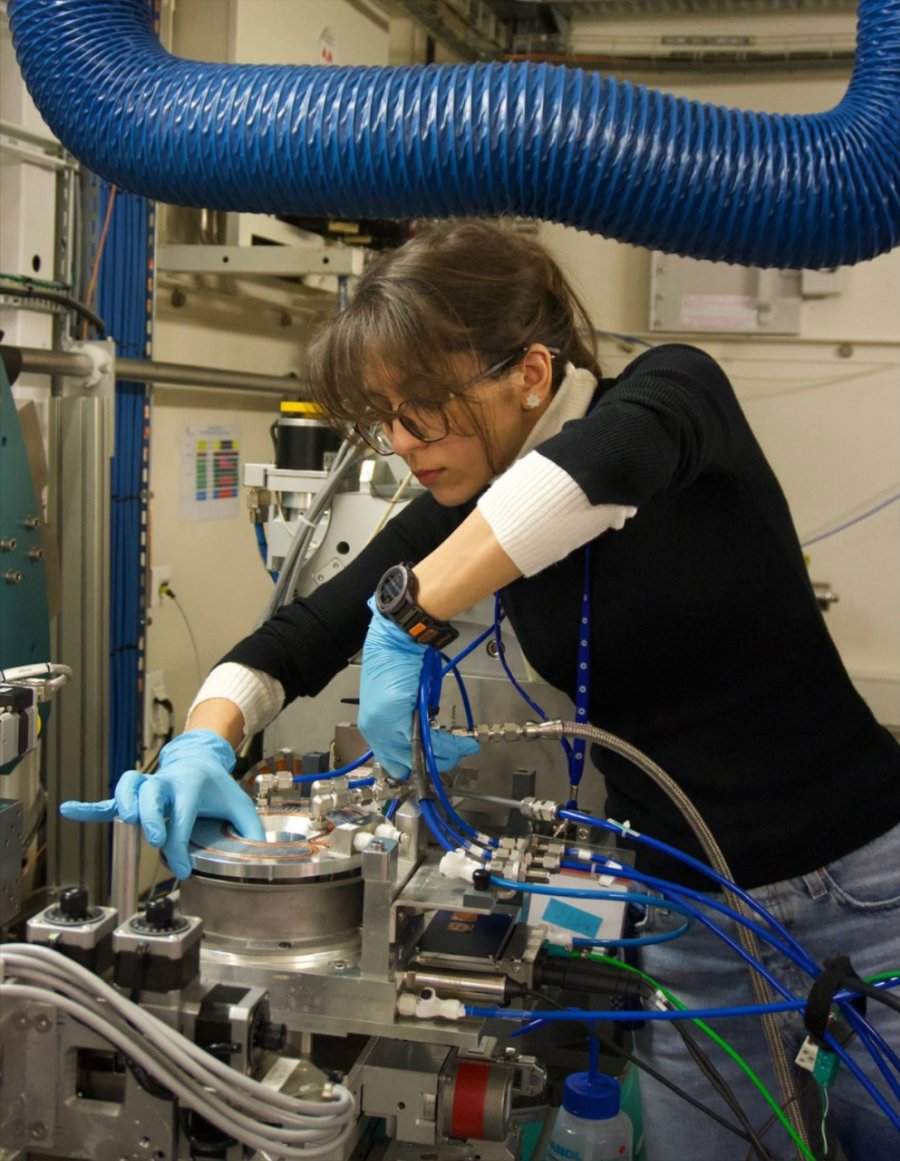
ID10 SURF at 2D ENGINE partner ESRF
Author bio

2D ENGINE
2D Engine is a Horizon Europe project and part of the Graphene Flagship initiative. The project aims to develop novel two-dimensional semiconductor and insulating materials for next-generation electronic and optoelectronic devices. Instead of relying on exfoliation of naturally occurring materials, the project engineers entirely new 2D phases that do not exist in nature and must be synthesised bottom-up. All this effort is driven by a simple but critical challenge: how to continue scaling electronic devices while making them more energy-efficient and more sustainable.