


Spotlight: Sina Dörr – powering the next generation of solar panels one raindrop at a time
Sina Dörr, a PhD student at the University of Kassel, won the Impact Leader Award at Graphene Week 2025 in Vicenza, Italy. She now shares with us her thoughts on 2D materials and explains her research using transition metal dichalcogenides to improve raindrop triboelectric nanogenerators.
How did you first start working with 2D materials?
I came in contact with a lot of different 2D materials throught my study program in nanoscience. My own research in that field, however, started with my master’s thesis on the topic of 2D rubrene nanocrystals.
Why are you excited to work with 2D materials?
I am excited to work with 2D materials as they can show such different properties compared to bulk materials, and the huge opportunities that can be explored by making slight changes in their composition, dimensionality and usage.
Who has been the biggest influence or mentor in your career so far?
My biggest influence in my career is hard to point at. What inspired me to keep studying and further starting my PhD were my fellow students during my time in the university. The biggest influences on my career, though, were my colleagues and my professor Claudia Backes in my current working group at University of Kassel. They inspire me with their contagious enthusiasm, opportunities and research.

Sina Dörr
University of Kassel
Graphene Week 2025 impact leader
How did you first become interested in your current research project?
During my master’s thesis, I learned about the transition metal dichalcogenides (TMDs) and their different exfoliation methods used in my working group. That has caught my interest and as our Postdoc Foad Ghasemi started the new topic on raindrop triboelectric nanogenerators (RD-TENGs) I knew that I would like to be a part of this research.
What is your research focus? What is your current research goal?
My research focuses on the surface modification of the RD-TENGs, to improve the overall performance. My approach is the covalent functionalisation of the 2D triboelectric layer, to improve the interlayer interaction of the water droplet and the device. The big goal is to gain enough energy to improve solar cells with an additional coating on top. In addition to this project we also work in the Graphene Flagship’s 2D-PRINTABLE project, with the goal of fabricating printable electronic devices.
In what way can graphene and other 2DM improve this area?
2D materials can improve TENGs because they exhibit higher surface charge densities than currently used polymers, have tunable electronic characteristics, and can display different triboelectric tendencies depending on their modification (e.g. functionalisation).
Gaining energy out of raindrops would be a great way to supplement the decreasing solar cell efficiency on rainy days and build all-weather systems."
Graphene Week 2025 impact leader, University of Kassel
Become an Impact Leader!
Our Graphene Week Impact Leader programme is a chance to be recognised for community building efforts in the field of 2D materials.
It provides the opportunity to expand your network, showcase your dedication, gain recognition and strengthen the collaborative spirit of our field.
 Graphene Week 2026 Impact Leader
Why do you feel your research is important, and what benefits could it bring to society?
I think this research is important, as the demand for energy rises continuously and developing new ways of producing green and renewable energy are of high interest. The use of easy fabrication methods is favourable and can be applied for our RD-TENG devices. Gaining energy out of raindrops would be a great way to supplement the decreasing solar cell efficiency on rainy days and build all-weather systems.
As an early career researcher, where do you see your field going?
The research on 2D materials—especially TMDs in TENGs—is still quite new, and I think there are still countless possibilities to explore. With such a big pool of possible material modifications, I think it will be possible to improve the production of green energy by using daily life movements or weather phenomena, such as rain.
What do you enjoy the most in your career path?
I really enjoy the daily exchange with my colleagues as well as going to conferences and meeting new people. It is amazing to see new achievements and research, exchange knowledge and to have the possibility to gain further expertise throughs exchanges with other research facilities.
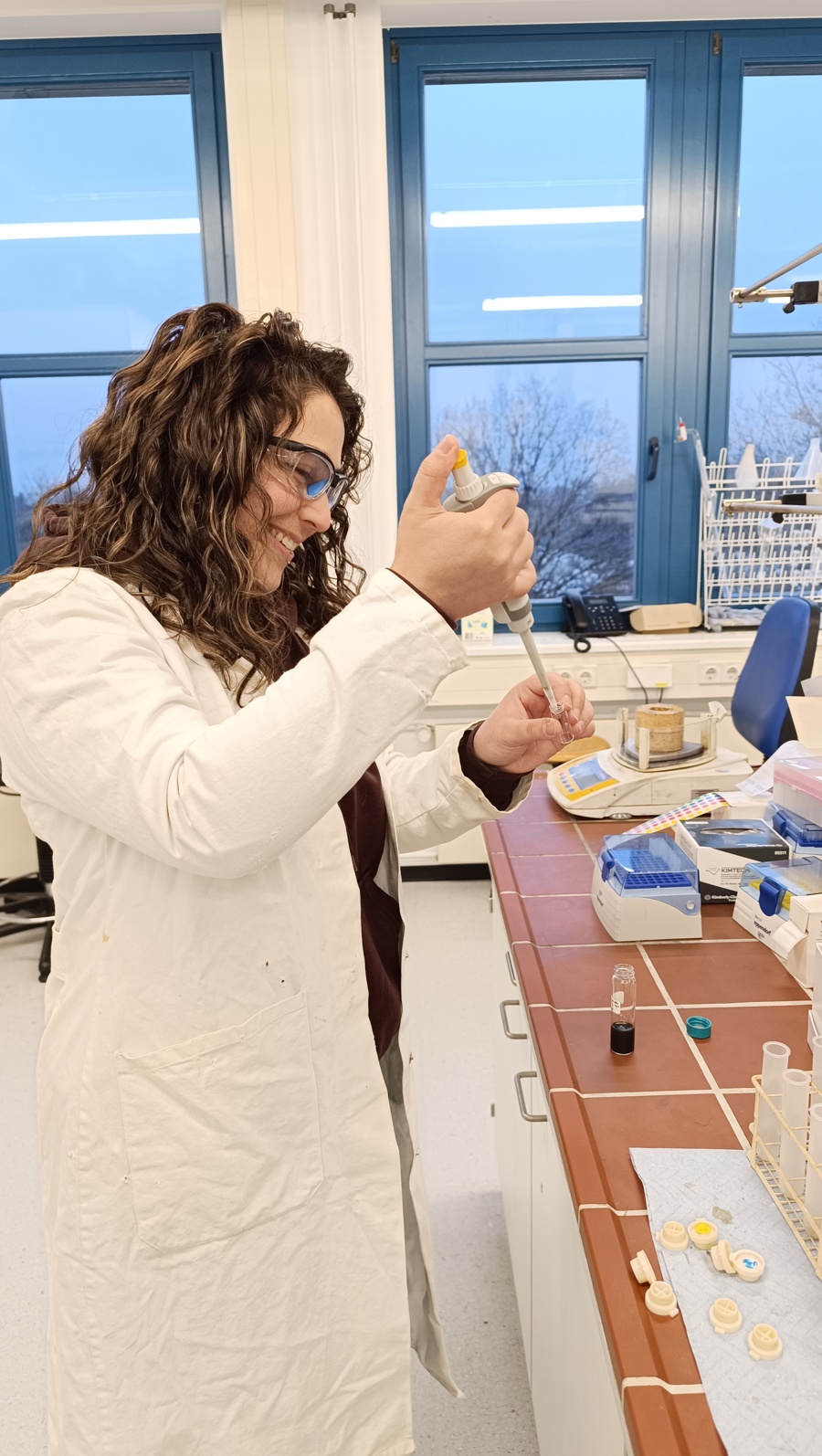
Sina Dörr in the lab
Do you have a favourite anecdote or moment from your research journey?
An amazing moment very recently was the organisation of a nanostructure themed workshop for students from schools for the CINSaT (Center for Interdisciplinary Nanostructure Science and Technology) of the University of Kassel. Over two days, we were able to convey our enthusiasm for research and current research topics to the students, thereby hopefully inspiring a new generation of young scientists.
What is the most challenging part of your current work?
One challenging part is currently the reproducibility of homogeneous film deposition of functionalised 2D TMD flakes, which is necessary for a consistent performance of the device at every location of the device. In order to get a fully closed film, multiple depositions are necessary, each of high quality with the same reproducibility. Another issue is determining the impact of surface modification on the final performance of TENGs.
If you could work on any dream project involving 2D materials, what would it be?
Since research today covers such a wide range of possible options, I haven't been able to learn about everything yet, but I think it would be a similar project to the one I'm working on now. A project that helps improve lives and focuses on sustainable and simple manufacturing methods, so that everyone can benefit from the end product. Also, graphene and 2D materials in general are promising materials and will undoubtedly make more significant contributions to industry in the future.
What are your plans for the future?
My first goal is to finish my PhD and gain new skills on the go. I would like to further supervise students and inspire students to be part of science.
When I think about the future, I would like to be in a leading position where I can support my team in every situation and be part of building something new together.
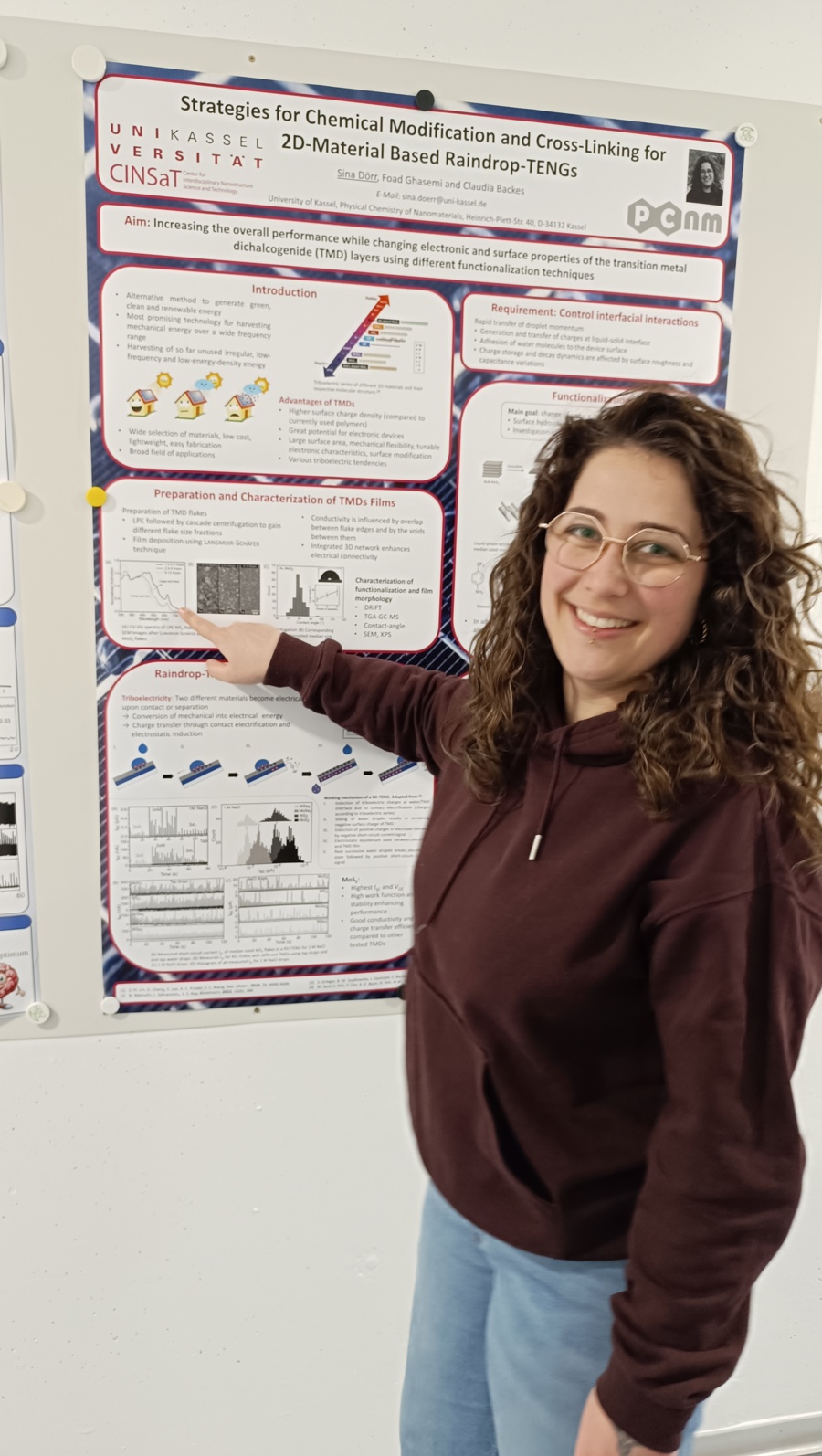
Sina Dörr, University of Kassel
Tell us about your experience at Graphene Week 2025. How was this event for you?
Graphene Week 2025 was my first big conference, and it was amazing to see all the different levels of research coming together here, from fundamental research to applications and devices. Talking to people who established a startup from scratch was interesting and one of my favourite parts of this conference.
How did you feel about winning the Graphene Week Impact Leader Award?
It was unexpected, but I am honoured to be part of this and that I might be able to inspire other people to become part of the 2D community.
Talking to people who established a startup from scratch was interesting and one of my favourite parts of this conference."
Graphene Week 2025 impact leader, University of Kassel
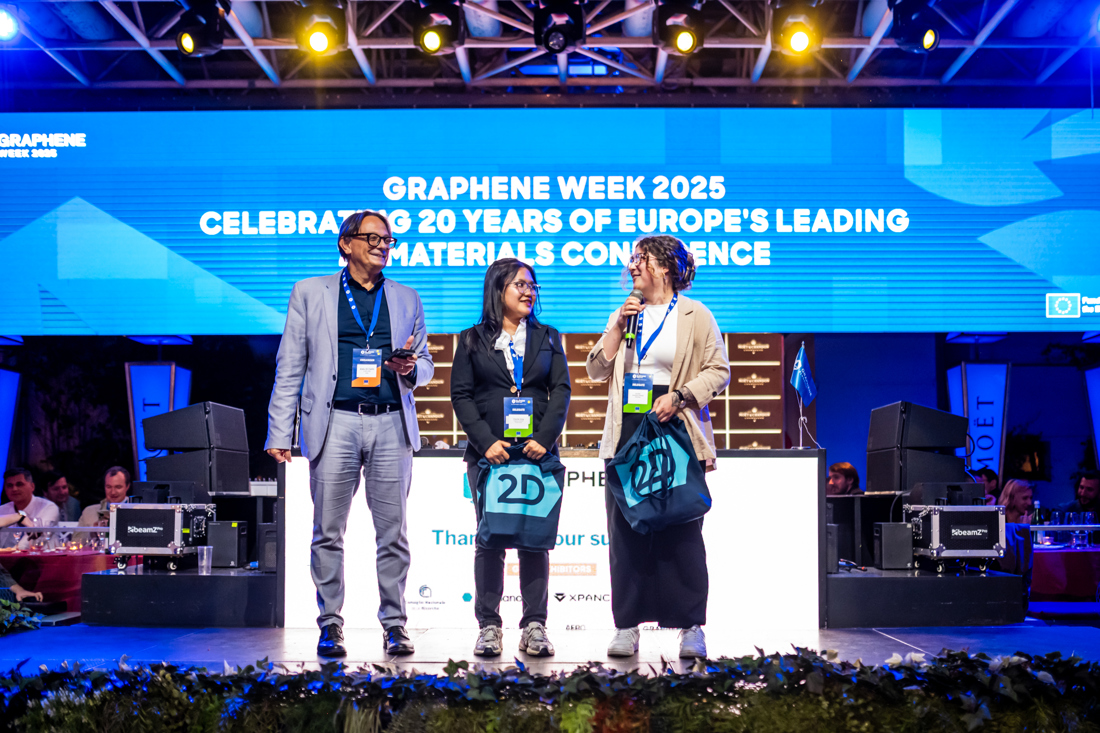
Graphene Week 2025 Impact Leaders
Author bio

Graphene Flagship
Bringing together 126 academic and industrial partners in 13 research and innovation projects and 1 coordination and support project, the Graphene Flagship initiative will continue to advance Europe’s strategic autonomy in technologies that rely on graphene and other 2D materials. The initiative, which builds on the previous 10-years of the Graphene Flagship, is funded by the European Commission’s Horizon Europe research and innovation programme.