


New Graphene Flagship project e-FLOWER aims to transform sustainable wearable electronics
Four-year Horizon Europe project will develop flexible, durable and circular e-textiles combining advanced materials, scalable manufacturing and user-centred design
A new Graphene Flagship project, e-FLOWER, has launched with the ambition of making next-generation electronic textiles more comfortable, durable, sustainable and easier to integrate into everyday life.
Funded through the European Union’s Horizon Europe programme, e-FLOWER brings together 12 partners from seven EU countries and one associated country to develop advanced materials, manufacturing processes and electronic components for stretchable and conformable e-textiles. Led by the Tyndall National Institute (Daniela Iacopino), the €5 million Research and Innovation Action will run from June 2026 to May 2030.
Electronic textiles, or e-textiles, combine textiles with technologies such as sensors, energy harvesting, energy storage and communications. They have potential applications across fitness, wellbeing, healthcare and lifestyle, but their wider adoption is currently limited by challenges including rigid components, loss of performance under repeated deformation, complex integration, and environmental impacts associated with manufacturing and end-of-life.
e-FLOWER – Transformational e-Textiles: Materials and Processes for Stretchable, Durable and Sustainable Wearable Electronics – aims to address these challenges through a holistic approach spanning materials, manufacturing, electronics, circularity and user experience.
Designing e-textiles for performance and circularity
The project will develop novel scalable bio-based materials with tailored stretchability, flexibility, mechanical robustness and reversible functionality. These materials will include interposers, adhesives, inks and encapsulants designed to support stretchable and modular electronic textiles while enabling disassembly, repair, reuse and material recovery.
e-FLOWER will also advance low-energy additive manufacturing processes, with the aim of reducing resource consumption, waste and environmental impact. New flexible and conformable e-components will include sensors, antennas, energy harvesters and battery modules designed for seamless integration into textile platforms.
A key element of the project will be its focus on circular design from the outset. Rather than treating recycling and end-of-life as an afterthought, e-FLOWER will investigate modular e-textile architectures that can be disassembled and repaired, reused or recycled, helping to reduce the environmental footprint of wearable electronics.
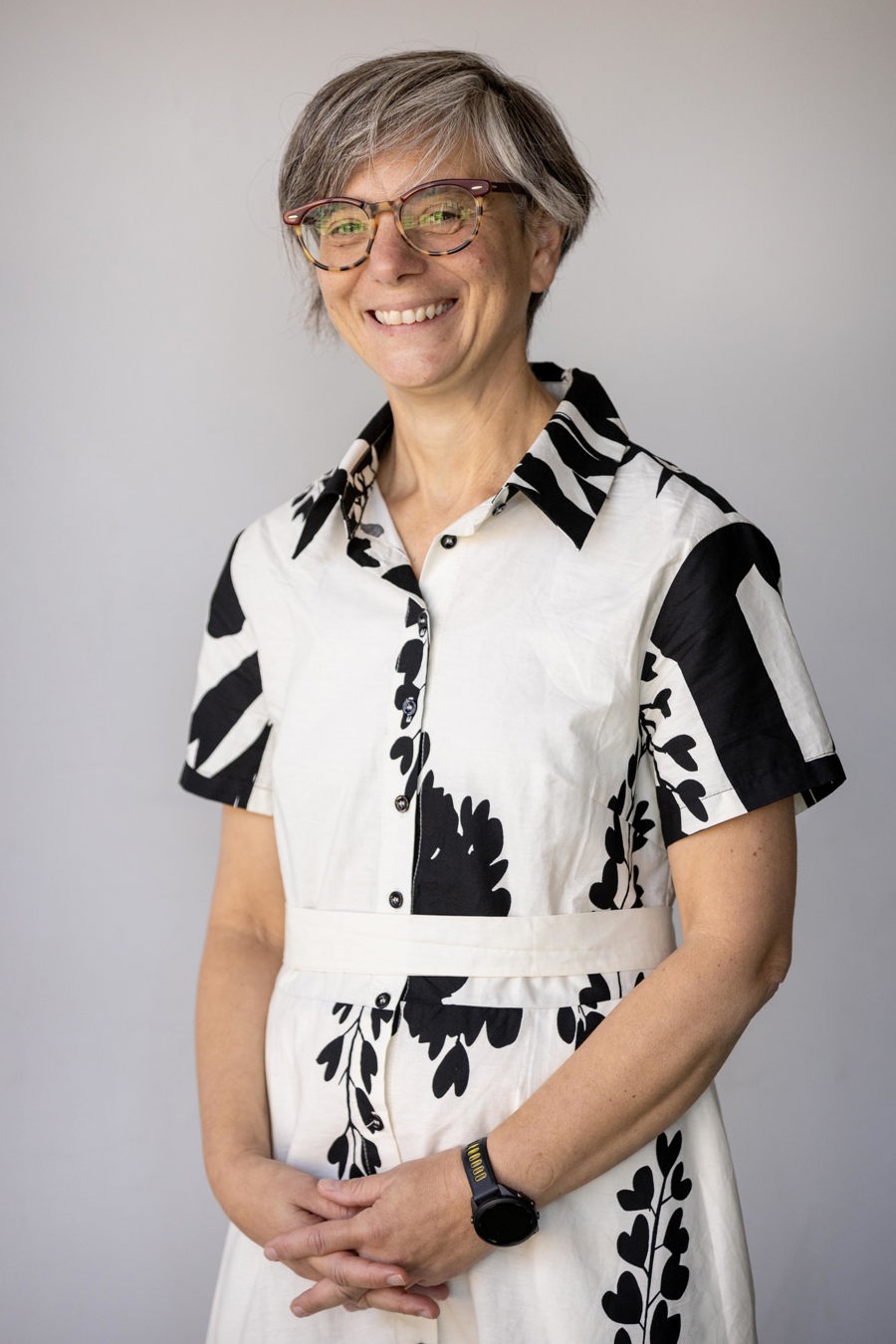
Daniela Iacopino, Tyndall National Institute, e-FLOWER coordinator
This project takes a systems-level approach to e-textiles, bringing together materials, manufacturing, electronics and circular design"
e-FLOWER coordinator
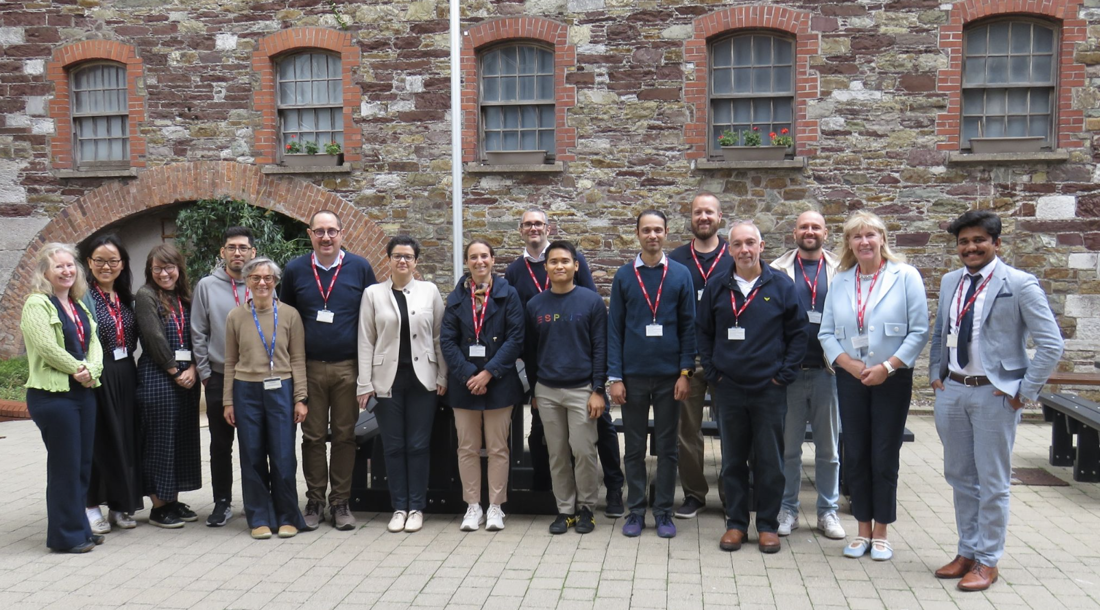
e-FLOWER kick-off meeting at Tyndall, Sep 2026
Bringing graphene into next-generation e-textiles
As a Graphene Flagship project, e-FLOWER will explore the contribution of graphene and advanced materials to the development of flexible and stretchable electronic technologies. Graphene is being incorporated into the project's broader materials and device development approach, supporting the ambition to create high-performance electronic components that can conform to textile platforms.
The project will bring together advanced materials and scalable processing with components such as sensors, antennas and energy harvesters. This approach is intended to move beyond individual material innovations towards fully integrated, robust and user-friendly e-textile systems.
From laboratory to real-world applications
The technologies developed by e-FLOWER will be tested through three user-driven demonstrator areas: LAND, WATER and SPACE.
These include fitness sportswear for running, cycling and walking; fitness and safety sportswear for swimming and diving; and fitness and wellbeing wear for astronauts during indoor activities.
Across these use cases, the project will assess factors including performance and accuracy, reliability and battery life, resistance to stress, sweat and washing, as well as usability, comfort and aesthetics. Circularity will also be evaluated through criteria such as assembly and disassembly, repair, reuse, recyclability and biodegradability.
“This project takes a systems-level approach to e-textiles, bringing together materials, manufacturing, electronics and circular design,” says Daniela Iacopino, Tyndall National Institute, e-FLOWER coordinator. “By combining these areas with user-driven demonstrators, we aim to develop wearable technologies that are not only high-performing, but also comfortable, sustainable and designed for a circular future.”
The project will apply Safe and Sustainable by Design (SSbD) principles alongside Life Cycle Assessment, Social Life Cycle Assessment and Life Cycle Costing to evaluate the sustainability and safety of its technologies.
Through its combination of advanced materials, energy-efficient manufacturing, innovative e-components and circular integration strategies, e-FLOWER aims to contribute to greener, smarter and more competitive European wearable technologies.
The project is one of four sister projects – alongside STAND, SoftIE and MORPHEUS – funded under the Horizon Europe call Innovative Advanced Materials for conformable, flexible or stretchable electronics.
About e-FLOWER
e-FLOWER – Transformational e-Textiles: Materials and Processes for Stretchable, Durable and Sustainable Wearable Electronics – is a four-year Horizon Europe Research and Innovation Action running from June 2026 to May 2030. Coordinated by the Tyndall National Institute, the project brings together 12 partners from seven EU countries and one associated country, with a total budget of approximately €5 million.
The project is funded by the European Union under the Horizon Europe Programme, Grant Agreement No. 101297960 (e-FLOWER).